
Exploring South London’s Blue Plaques
London’s blue plaques are easy to walk past without noticing. A small ceramic disc on a townhouse wall, a name, a couple of dates. But stop and read one, and you’re suddenly standing exactly where a Nobel laureate worked, or where a future Princess of Wales once hung a sign reading ‘chief chick’ on her bedroom door.
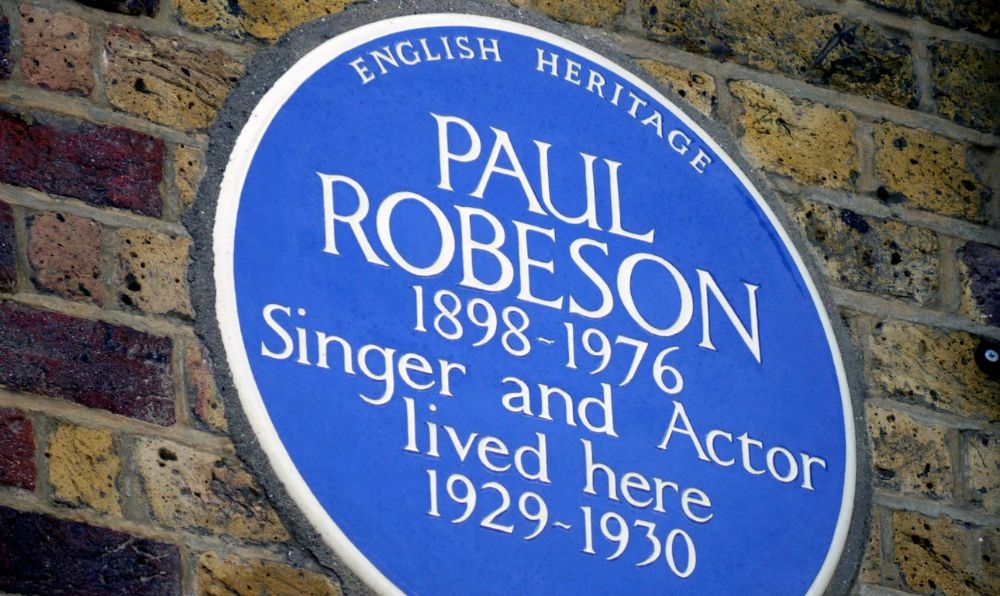
The scheme itself dates back to 1866, making it one of the oldest of its kind anywhere in the world. English Heritage now looks after it, and there are nearly 1,000 plaques scattered across the capital. A good number of the most interesting ones sit in south and south west London, in boroughs like Chelsea, Wimbledon, Richmond and Twickenham, places that reward a slower, more curious kind of visit.
We’ve pulled together 16 of the best south London blue plaques, grouped by theme rather than by postcode, so you can build your own route depending on what interests you most. Most of these are private homes, so you won’t be able to go inside, but a few are open to the public, and we’ve flagged those along the way.
Royal Connections and Reformers
Start with the address that draws the most quiet pilgrimages: Flat 60, Coleherne Court, Old Brompton Road, SW5 0EF. This is where Lady Diana Spencer lived before and during her courtship with the Prince of Wales. She bought the flat in July 1979 for £50,000, using a bequest from her maternal great-grandmother, and furnished it in what was described as a ‘warm but simple Habitat style’. She shared it with three flatmates, each paying £18 a week, for about 18 months. Her former flatmate Virginia Clarke later said the flat was ‘always full of laughter’.
A short distance away at Faraday House, 37 Hampton Court Road, KT8 9BW, you’ll find the plaque for Princess Sophia Duleep Singh, a suffragette, Red Cross nurse and vocal critic of British rule in India. She lived here for more than five decades and used her royal status to campaign for women’s votes. In 1911 she joined the Women’s Tax Resistance League under the slogan ‘no taxation without representation’, and refused to pay her own taxes. Bailiffs eventually raided Faraday House to recover the debt, which makes it one of the more dramatic addresses on this list.
Sylvia Pankhurst’s plaque at 120 Cheyne Walk, Chelsea, SW10 0ES belongs here too. Known for her militant suffrage tactics, she was also an early and outspoken opponent of Italian fascism, and in 1935 founded the New Times and Ethiopia Times, which became the main English-language source on Ethiopian affairs. Her plaque wasn’t without controversy, interestingly, the Greater London Council’s Historic Buildings Committee rejected it on first application in 1980, before approving it two years later.
Writers and Artists Who Lived Here
Chelsea’s old artists’ quarter is where Oscar Wilde wrote at the height of his fame. His home at 34 Tite Street, Chelsea, SW3 4JA is where he produced The Picture of Dorian Gray and The Importance of Being Earnest, working mainly in the library but also, apparently, in an eccentric smoking room at the back of the house. He left in 1895 to serve his prison sentence for ‘gross indecency’, and the contents of the home were sold off entirely.
Across the river in Lambeth, a much younger and lesser-known Vincent van Gogh lodged at 87 Hackford Road, South Lambeth, SW9 0RE between 1873 and 1875, before he’d painted a single one of the works he’s now famous for. He was in London working for art dealers and took cheap lodgings with Mrs Sarah Loyer and her daughter Eugenie. Van Gogh reportedly fell for Eugenie, who was already engaged to someone else, and moved on to Kensington not long after. His time in London is thought to have shaped his later style; he was struck by Constable’s The Cornfield and would go on to paint several cornfields of his own.
George Eliot’s plaque at Holly Lodge, 31 Wimbledon Park Road, SW18 5SJ holds a small record of its own, it was the first blue plaque ever awarded in south London. She lived there from 1859 to 1860 and wrote The Mill on the Floss in the house, which she once described as ‘a tall cake with a low garnish of holly and laurel’. She eventually moved on, feeling the house allowed for ‘too many eyes’.
Science fans should head to Donovan Court, 107 Drayton Gardens, Chelsea, SW10 9QS, the home of Rosalind Franklin for the last seven years of her life. While living here she held a fellowship at King’s College London, where her work on the structure of DNA laid crucial groundwork for Watson and Crick’s 1953 discovery, and the Nobel Prize that followed in 1962.
Graham Greene’s plaque sits at 14 Clapham Common North Side, SW4 0RF, where he lived with his family from 1935 to 1940. The house was hit by a bombing raid during the war; it was empty that night because his wife and children had already been evacuated, and he himself was staying with his lover. That real-life episode later inspired the plot of his novel The End of the Affair. The house survived structurally and was rebuilt afterwards.
Further out in Twickenham, J.M.W. Turner built his own country retreat at 40 Sandycombe Road, TW1 2LR, formerly known as Sandycombe Lodge. He designed it himself and lived there between 1813 and 1826, sketching the Thames and the surrounding fields, which he later worked up into watercolours and oils back in his studio. This is one of the few homes on our list that’s open to the public, so it’s worth building a stop here into any Richmond-upon-Thames itinerary.
Stars of Stage and Screen
Dame Margaret Rutherford, the comic actress best known for playing Agatha Christie’s Miss Marple, is commemorated at 4 Berkeley Place, Wimbledon, SW19 4NN, where she lived with her aunt from 1895 to 1920. She later won an Oscar for her supporting role in The VIPs (1963).
Charlie Chaplin’s first proper home of his own was 15 Glenshaw Mansions, Brixton Road, SW9 0DS, rented after his break with the Fred Karno Company in 1908. He shared it with his brother Sydney and later called it a ‘cherished haven’. By English Heritage’s account, the pair spent a grand total of £40 kitting it out from a second-hand shop, carpet, lino, two armchairs, a Moorish screen and, memorably, a nude portrait. Chaplin left for America in 1910.
Dame Ellen Terry, a celebrated Shakespearean actress who performed mostly at the Lyceum, lived at 22 Barkston Gardens, Earls Court, SW5 0ER with her friend Mrs Rumball (‘Boo’) and a singing bullfinch named Prince. It was here she conducted her well-known correspondence with George Bernard Shaw, and the house was apparently known locally for its flower displays.
Out in Teddington, Sir Noël Coward was born in 1899 at 131 Waldegrave, TW11 8BB, a house then called Helmsdale, which he later referred to, with typical dryness, as ‘an unpretentious abode’. He went on to write more than 50 plays, and in 1964 his comedy Hay Fever became the first play by a living author staged at the National Theatre.
And for a taste of 18th-century theatrical glamour, visit Garrick’s Villa, Hampton Court Road, TW12 2EJ, the summer retreat of actor David Garrick, famous for his portrayals of Lear and Macbeth. The villa, originally named Full House, has a portico facing the Thames designed by Robert Adam, and its garden temple to Shakespeare was worked on by Lancelot ‘Capability’ Brown. It remains open to visitors today.
A Sporting Legend
If tennis is more your interest, head to 55 York Avenue, Richmond, SW14 7LQ, home to Kathleen ‘Kitty’ Godfree for over fifty years. Godfree won five Olympic medals across two Games, a record only recently matched by Venus Williams. She kept playing competitively well into her nineties, beating Jean Borotra in a mixed doubles match between Britain and France in 1988.
The Gardens Behind England’s Grandest Estates
Finally, for anyone who loves a good garden, Lancelot ‘Capability’ Brown’s plaque is at Wilderness House, Moat Lane, Hampton Court Palace, KT8 9AR. Brown designed more than 250 landscapes across England, and in 1764 George III appointed him Chief Gardener at Hampton Court, moving him into Wilderness House, which had been the official residence of the palace’s head gardeners since 1700. He planted the Great Vine there in 1768, a Black Hamburg vine that remains the largest grapevine in the world to this day.
These plaques won’t all fit into a single afternoon, and a few are a fair distance apart, Clapham to Hampton Court is a proper outing, not a stroll. But that’s rather the point. Pick a theme, pick a borough, and let one plaque lead you to the next. South London’s blue plaques reward anyone willing to slow down and actually read the small print on the wall.