

Best Parks in London: 32 Green Spaces Worth a Visit
Best Parks in London: 32 Green Spaces Worth a Visit
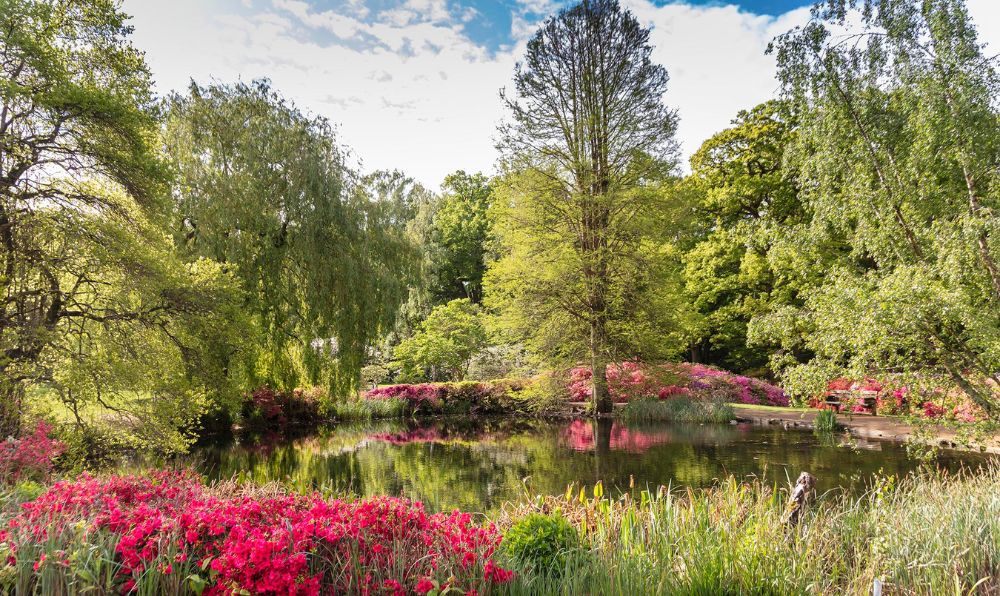
Main image: Isabella Plantation at Richmond Park (c) The Royal Parks, photo by Heather Carr / Joel Bradley
London has a reputation for being busy, built-up and short on breathing room. Spend any time there and you’ll find the opposite is true. Some of the best parks in London are a short tube or train ride from the centre, and a handful of genuinely spectacular gardens sit just over the city boundary in Surrey, easily reachable as a day trip.
Whether you’re based in the city for a few days or planning a longer visit, a few hours in a park is one of the best ways to see a different side of London. We’ve pulled together 32 of our favourites, grouped by the kind of day out they’re best suited to, so you can pick the right one whether you’ve got toddlers in tow, want a proper long walk, or fancy exploring some history along the way.
The grand royal parks and palaces
If you only have time for one or two green spaces, start here. These are London’s biggest, most famous, and arguably most impressive parks.
Richmond Park, in south-west London, is the largest of the Royal Parks and home to free-roaming deer, so keep a respectful distance if you spot one. Pembroke Lodge has lovely gardens and an ice cream kiosk, while Petersham Playground is a good stop for younger children with a sandpit, waterplay and swings. The Isabella Plantation, with its ponds, streams and evergreen azaleas, is a peaceful spot for a picnic.
Bushy Park, near Hampton Court, is quieter than Richmond but just as scenic, with its own deer herd and woodland gardens. Look out for the Diana Fountain, designed by Sir Christopher Wren. The play area has a climbing frame, balance trail and a large sandpit, and the Pheasantry Cafe is a nice spot for an ice cream afterwards.
Hampton Court Palace and Gardens was Henry VIII’s retreat, and it’s still an impressive day out more than 500 years later. There are 60 acres of formal gardens and 750 acres of historic parkland to explore, plus the famous maze and the Magic Garden playground, where kids can cross bridges, hide in dens and tackle a sandpit guarded by dragons. There’s an admission fee for the palace and main gardens.
At the Royal Botanic Gardens, Kew, a UNESCO World Heritage Site, you’ll find over 50,000 living plants, a children’s garden the size of 40 tennis courts, and a treetop walk that lifts you 18 metres above the park. The Rock Garden is one of the oldest and largest of its kind in the world. Admission fee applies.
Wide-open commons and heaths
For a proper escape without leaving the city, head for one of London’s commons or heaths. These spaces tend to be bigger, wilder and less manicured than a formal park.
Hampstead Heath, in north London, is free to enter and genuinely vast. Kenwood House, a stately home dating back to the 17th century, sits within the heath and has featured in numerous films. It’s also home to a world-class art collection and landscaped gardens, including a kitchen garden with its own community programme.
Clapham Common is one of London’s largest and oldest public open spaces, and it’s won both a Green Flag award and Commons of the Year. There’s plenty for sport, with netball, basketball, football, rugby, cricket nets and three fitness areas, plus ponds, woodland and meadows to explore. The Victorian bandstand is worth seeking out, and there are three cafes to choose from.
Wimbledon and Putney Commons cover woodland, scrubland, heathland and ponds, and are good for spotting birds and wildlife with children. The windmill near the cafe is now a small museum, and the Information Centre is open daily if you want to learn more about the area’s history.
Riverside parks for a gentler stroll
London grew up around the Thames, and some of its loveliest parks make the most of that riverside setting.
Wandsworth Park is a Grade II listed Edwardian park with fantastic river views, a cafe overlooking the playground, and a putting green if you fancy a round.
Marble Hill Park, in Twickenham, has free entry to Marble Hill House, where you can learn about its former resident Henrietta Howard. The 60-acre riverside parkland includes woods, a family trail, a playground and even a nine-pin bowling alley.
Bishops Park</strong>, in Fulham, is one of the area’s most popular green spaces, with a long riverside path, several playgrounds, a skate bowl and waterplay in summer. It also has a Rose Garden, a Spanish War Memorial Garden and a Moat Garden worth a slower look.
National Trust and RHS gardens worth travelling for
A short trip out of central London opens up some genuinely impressive gardens, several run by the National Trust or the Royal Horticultural Society. Most of these charge an admission fee, so it’s worth checking current prices before you go.
RHS Garden Wisley, in Woking, is about 30 minutes from London and holds one of the largest plant collections in the world. The Glasshouse is a highlight year-round, and RHS Hilltop is the UK’s first dedicated gardening science hub. The Old Laboratory has interactive exhibits covering the garden’s history.
Polesden Lacey, near Great Bookham, is a National Trust property surrounded by over 1,500 acres of gardens, hills and ancient woodland. The Edwardian house was once the weekend retreat of socialite Margaret Greville, and there’s a natural play area with swings, tunnels and giant nests for children.
Winkworth Arboretum**, in Godalming, is home to more than 1,000 species of trees around a tranquil lake. The Tree Adventure play area is built from the arboretum’s own oak trees and includes a climbing wall and rope tunnel.
Claremont Landscape Garden, near Esher, has almost 300 years of history and a grass-covered amphitheatre overlooking a picturesque lake. It’s known nationally for its camellia collection.
Morden Hall Park is a former deer park with the National Trust’s only garden centre, a Potting Shed Cafe, and a Rose Garden with 45 different varieties. There’s a natural play area with a zip line, and the Wandle Trail runs on towards Poulter Park and Carshalton if you fancy a longer walk.
Historic houses with parkland attached
A few of London’s parks come with a genuine slice of history built in.
Gunnersbury Park spans 72 hectares and was once owned by Princess Amelia before later becoming the residence of Baron Lionel de Rothschild. It became a public park in 1926, and the on-site museum holds around 50,000 items.
Nonsuch Park, between Cheam and Ewell Village, is built around Nonsuch Mansion House, with open space, flowers and wildlife surrounding it. The gallery and museum are open at selected times and are worth timing your visit around.
Beddington Park and The Grange covers 58 hectares and includes evidence of Bronze Age settlements. The Great Tudor Hall here is the only Grade I listed building in Sutton. The River Wandle runs through the park and widens into a lake in the Grange Garden.
Best for a family day out
If you’re travelling with children, these are the parks built with them in mind.
Battersea Park has an adventure playground complete with a fire engine and helicopter, plus a children’s zoo and Go Ape, where you can zip through the trees or take on the Codebreakers puzzle challenge.
Brockwell Park, in Lambeth, has a Green Flag award, a miniature railway, a wet play area, and sports facilities including tennis, basketball and a BMX track. Brockwell Lido and the 19th-century Tritton clock tower add some character.
Dulwich Park, in Southwark, has nearly 30 hectares of green space, a large children’s play area and bike hire. Afterwards, Dulwich Gallery nearby holds over 600 artworks, including pieces by Rembrandt, Gainsborough and Poussin.
Crystal Palace Park is currently being renovated, with plans for a dinosaur-themed playground and restored dinosaur sculptures. It remains open throughout the work, and still has a skatepark, market, museum, farm and maze.
Peckham Rye Park and Common has over 100 acres including a lake, woodland and formal gardens, plus a newly renovated adventure playground for older children. Its history goes back to the Domesday Book.
Wimbledon Park, designed in 1764 by Capability Brown, has two separate play areas, a splash pad, crazy golf and a lake that’s the real centrepiece of the park.
Palewell Common, in East Sheen, is close to Richmond Park and has a nine-hole pitch and putt course, a paddling pool and play areas designed to be accessible, including a DDA-compliant swing seat.
Smaller local gems worth seeking out
hese are quieter, less famous spots, but good ones to know if you want to see a different, more local side of the city.
Sunbury Park in Spelthorne, includes the Sunbury Walled Gardens, where cows are still used to manage the grassland and create space for wildflowers. The Lendy Memorial, rebuilt after being destroyed in the Second World War, sits at its centre.
Streatham Rookery, between Streatham, Norbury and West Norwood, is a Grade II listed garden with ornamental ponds, an orchard and a paddling pool. A farmers’ market runs every third Saturday of the month.
Horton Gardens, in Epsom, opened last year after more than 30 years as an inaccessible patch of brambles and rubble. Volunteers have transformed it, planting 1,000 new saplings and adding wildflower meadows and a cafe-bar.
South Park Gard, in Merton Park, covers 4 hectares with play areas, an outdoor gym and sunken gardens
Holland Gardens, in West Wimbledon, was gifted to the people of Merton in 1928 and has a wildlife area with a bug hotel and pond, alongside tennis courts and outdoor table tennis.
Oasis Nature Garden, in Clapham, runs free environmental play sessions for children aged 5 to 12, with a wildlife pond, fire circle and tree house.
A few practical notes before you go
Several of these — Hampton Court Palace, Kew, RHS Wisley, Polesden Lacey and Winkworth Arboretum among them — charge an admission fee, so it’s worth checking current prices and opening times before you travel. Most of the free parks are easy to reach by tube, train or bus from central London, though a few of the Surrey gardens are better suited to a car or a slightly longer train journey.
With this many options, you could build an entire London trip around parks alone. Pick two or three that match what you’re after — history, wildlife, a big playground, or just a quiet spot for a picnic — and you’ll come away with a very different impression of the city than the one most visitors leave with.