
A Guide to Staying in Sardinia
Sardinia has a habit of quietly outclassing its more famous Italian neighbours. It has the beaches people associate with the Caribbean, a mountainous interior that feels entirely untouched by tourism, and a population with one of the longest life expectancies on the planet. If you’re putting together a trip, this guide to staying in Sardinia pulls together what you actually need to know: when to go, how to get around, where to base yourself, and what to eat while you’re there.
Why Sardinia deserves more than a weekend
Sardinia is often filed under ‘Italian island with good beaches’, which undersells it badly. It’s one of the world’s so-called Blue Zones, a term used for the handful of places where people routinely live past 100. According to orderisda.org, Sardinia has nearly ten times more centenarians per capita than the USA, and it was the first region in the world to be given the Blue Zone label.
That longevity isn’t an accident. It comes from a slower pace of life, a diet built around fresh, simple food, and a culture that prioritises time outdoors. You’ll feel all of that within a day or two of arriving.
When to visit
Unless you actively want to compete for sun loungers in 35-degree heat, skip peak summer. April to May and September to October are the sweet spot: warm enough to swim comfortably, quieter on the roads and beaches, and noticeably better if you’re planning to hike or cycle, since Sardinia’s trails get busy once the summer crowds arrive.
Getting there and getting around
Sardinia has three airports, so where you fly into will shape your itinerary. Cagliari Elmas, in the south, is the largest. Alghero serves the north-west. For the north-east, including the Costa Smeralda, you’ll want Olbia Costa Smeralda Airport, which sits around 4km from Olbia itself, one of the island’s best-connected towns.
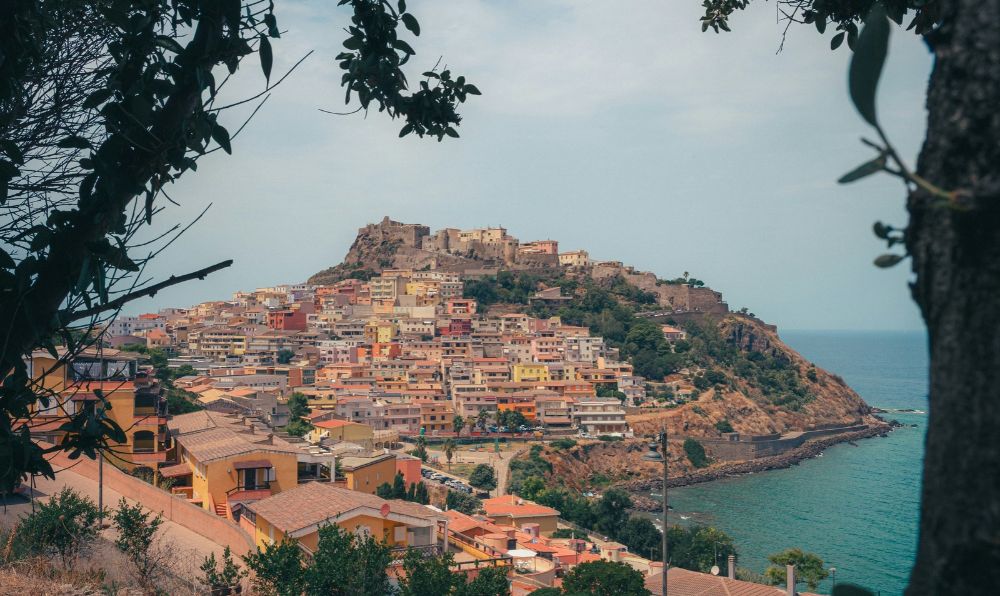
Hire a car if you can. Public transport exists, but it won’t get you to the smaller coves, hilltop towns, or less-visited beaches. The drive itself is part of the experience: expect pastel-coloured villages, dramatic coastal views, and glimpses of the Costa Smeralda’s famous shoreline as you go.
Where to stay in north-east Sardinia
North-east Sardinia, centred on the Costa Smeralda, is a sensible base for a first visit. It’s well connected, scenically spectacular, and gives you easy access to boat trips and smaller islands.
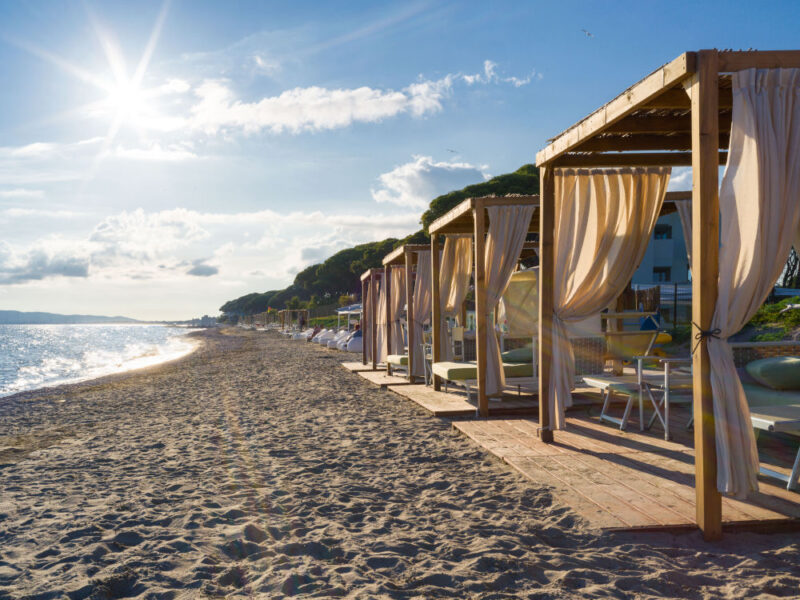
Hotel Capo D’Orso Thalasso & Spa, part of Delphina Hotels & Resorts, is a five-star option with real romance to it. It’s 100% green energy, sits within a few hundred metres of two white sand beaches, and is only 4km from Palau, a lively little seaside town worth an evening of its own.
Resort Cala di Falco (also Delphina Hotels & Resorts), in the marina town of Cannigione, is a better fit for families. It looks out over the Maddalena archipelago, and hiring a small boat from here to explore the coastline is one of the best things you can do in Sardinia, full stop.
Villa Del Golfo Lifestyle Resort, also in Cannigione, offers sweeping views of the Gulf of Arzachena. It’s a strong pick for a couples’ trip, and it’s close to several beaches, including La Conia, Spiaggia Barca Bruciata and Piaggia Mannena.
Gabbiano Azzurro Hotel & Suites in Golfo Aranci, once a modest fishing village, is a family-run, award-winning hotel that takes food and wine seriously. This is the kind of place where the owners want you to actually understand what you’re eating, not just eat it.
What to eat and drink
Sardinian food goes well beyond pasta, pizza and gelato, though you’ll find excellent versions of all three. At La Gritta in Palau, the clam spaghetti is worth the visit alone, paired with a glass of Cagnulari Isola Dei Nuraghi Igt 2019, one of the better red wines you’re likely to come across on the island. If you like it as much as we did, you can pick up a bottle or two at La Bottega Del ‘Isle in Palau town.
For gelato, Gelateria la Mucca Rosa in Palau is a good stop, though you’ll find no shortage of options island-wide.
Beyond that, a few things are worth actively seeking out: Fregula, a local Sardinian pasta shape quite different from anything you’ll find on the mainland; Sa Pompìa, a rare citrus fruit unique to Sardinia; and Myrtle, the island’s traditional liqueur. At Gabbiano Azzurro, Antonella Datome, who runs the hotel with her family, is an excellent source on all of this, along with the history of Golfo Aranci itself.
Beaches, islands and boat trips
The coastline is the headline act. From Palau, a 40-minute ferry takes you to La Maddalena, the largest of a cluster of seven islands. More broadly, La Maddalena National Park covers more than 60 smaller islands off Sardinia’s north-east coast, and various boat tours from the mainland will get you among them.
While you’re in Palau, it’s worth the walk (wear proper shoes) up to see Cape of the Bear, a granite formation that really does resemble a bear, with panoramic views to match the effort.
If you only do one thing beyond the main sights, find one of Sardinia’s small, secluded beaches and spend an hour there with no one else around.
Planning your trip
Sardinia works equally well as a romantic break, a family holiday or a solo trip. If you’re short on time, the north-east gives you a strong, varied slice of the island: coastline, food, culture and easy day trips, all within manageable driving distance of each other. Southern Sardinia, with Cagliari as its hub, is a different trip for another time, but it’s firmly on the list.
Tours of the region, including the itinerary this guide draws on, can be arranged through specialist operator Sardinian Places (sardinianplaces.co.uk), who focus specifically on this part of Italy.