
A Guide to Staying in Bath
Bath is one of those cities that seems to have been filming-location-scouted before filming locations were even a thing. Honey-coloured Georgian crescents, a bridge lined with shops that gives Florence’s Ponte Vecchio a run for its money, and hills rolling away on every side – it’s no wonder directors keep coming back, from Bridgerton’s steamiest scenes to a recent appearance in Wonka.
But Bath isn’t just a pretty backdrop. People have been travelling here for nearly two thousand years, drawn by the natural hot springs that give the city its name and its UNESCO World Heritage status. The Romans built baths around them. The Georgians turned the city into Britain’s social season headquarters, inspiring Jane Austen’s novels in the process. Today, you can still slip into those famous waters, just with rather better plumbing.
If you’re putting together a guide to staying in Bath for your own trip, here’s what we’d prioritise, from where to lay your head to where to eat the best game pie you’ll have this year.
Where to base yourself
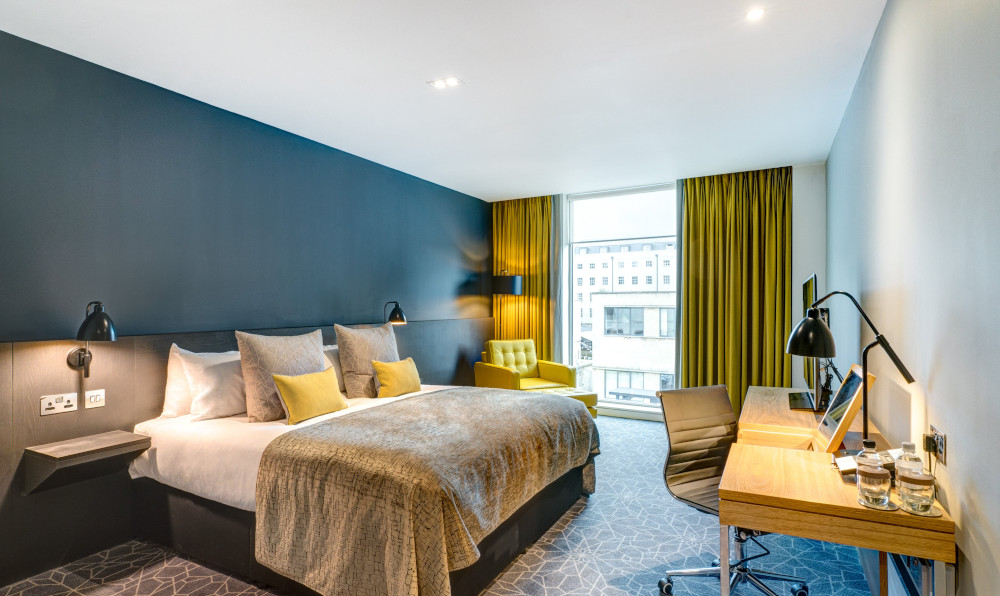
We stayed at the Apex Hotel, and for anyone travelling with family in tow, it’s worth knowing about. It’s modern, comfortable and a lot easier on the budget than some of Bath’s high-end boutique hotels, with rooms from £120 for a City Double.
One detail that matters more than it sounds: family rooms come with two full-sized single beds for children, rather than the cramped sofabed many hotels fob families off with.
There’s also a pool with spa-like touches built in, including a waterfall and jet massage beds, open to everyone using the pool rather than reserved as a separate treatment. After a long day of sightseeing, this was the genuine highlight of our trip for the kids.
The one practical snag: there’s no parking on site. The nearest car park is a five-minute walk away and costs between £17 and £22 for 24 hours. Honestly, we’d say don’t worry about it. The hotel is so central that you can park up on arrival and forget about the car entirely, walking to most of Bath’s main sights or hopping on one of the open-top tour buses if you’d rather sit down.
The city’s layered history, in one afternoon
Bath rewards a bit of context before you start wandering. The waters that first drew the Romans are still the city’s calling card today, and you can experience them yourself at the Thermae Spa, which has a rooftop pool overlooking the skyline.
The must-see for first-timers is the Roman Baths themselves. It’s a genuinely jaw-dropping complex of pools and ruins that gives you a real sense of how central bathing culture was to Roman life here. If you only do one paid attraction in Bath, this is probably it.
Jane Austen fans have their own pilgrimage trail. The Jane Austen Centre sits on Gay Street, just a few doors from where Austen actually lived, and has information boards along with costumes you can try on for photos. For a broader sense of Georgian Bath, No.1 Royal Crescent is worth the detour: it’s a beautifully preserved period home where recorded narration brings to life a fictional family renting the house for the social season. Bridgerton fans will recognise it instantly, as it doubles as the Featheringtons’ London home in the show.
Bridgerton’s imprint is all over the city, in fact. The Holburne Museum, a grand building packed with art including works by Gainsborough, plays Lady Danbury’s townhouse on screen.
Bath’s darker literary side
Austen isn’t the only writer with deep roots here. Mary Shelley wrote Frankenstein while living in Bath, and her story is, if anything, stranger and darker than the novel itself.
The House of Frankenstein museum tells that story and brings her monster to life, quite literally, as an 8ft breathing animatronic built to match Shelley’s original description rather than the cartoonish green-faced version pop culture settled on. There’s also an immersive jump-scare walkthrough in the basement. Our tween and teen rated it as highly as any of the city’s grander attractions, which says a lot.
A quieter cultural stop
The Victoria Art Gallery is also worth knowing about, though check before you go: the main floor is currently closed for conservation work. In its place, the lower gallery is running an exhibition of Ladybird Books, the illustrated children’s series many British adults grew up with. If you remember the Ladybird ‘Easy-Reading’ version of Rumpelstiltskin, be warned, it’s exactly as unsettling as you remember.
Shopping, cafes and where to eat
Once you’ve had your fill of history, Bath is an easy city to wander with no particular plan. There’s a strong independent streak running through its shops, from bookshops to vintage boutiques, and plenty of cafes for coffee and cake along the way.
For something more traditional, the Pump Room does afternoon tea in the same setting Austen used in both Northanger Abbey and Persuasion, which feels appropriate if you’ve already done the Austen Centre earlier in the day.
For dinner, we’d point you towards The Elder, tucked inside the Hotel Indigo Bath on South Parade. It’s owned by Mike Robinson, who also co-owns the Michelin-starred Harwood Arms in Fulham, and specialises in game and wild food. The room itself is handsome, all wood panelling, banquette seating and hunting prints.
We shared a wild mallard pie for two, which wasn’t what we expected but was all the better for it: rare duck breast under a layer of sausage meat, topped with a pastry dome, served alongside a confit of the leg that was tender with properly crisp skin. We also tried the pave of Bathurst estate fallow venison, rich and cooked exactly right, served with a side of bone marrow.
How to pace your visit
Given how close Bath is to London, there’s a good chance you’ll be back, so there’s no need to cram everything into one trip. We ticked off plenty on our list but still left room for a slow Sunday morning: a leisurely hotel breakfast, another dip in the pool, a bit more shopping and coffee, and just wandering the historic streets with nowhere in particular to be.
That, really, is the best guide to staying in Bath we can offer: see the big sights, but leave enough slack in the schedule to enjoy the city on its own terms.